Pages

Wednesday, March 14, 2012

Days 132, 133 Basket Days

March 8 & 9, 2012 Days 132 & 133

LA Book: 2 pages

Math: 4 Pages—History *

Book Report: Silent Rain

By Cornelia Cornelissen

Introduction Soft Rain is a nine year old Cherokee Native American girl who was forced to survive on the Trail of Tears in the 1830’s.

Summary of Story

Soft Rain and her family were living in the Cherokee Nation in what is now Georgia next to the other 4 civilized tribes. Soft Rain lived in a wigwam house with her mother, her father, her grandmother, and her 7 year old younger brother Hawk Boy. Soft Rain and her family carried on most of the Cherokee traditions with a few modern luxuries such as an indoor fireplace and stove. One Day, Soft Rain and Hawk boy went out to plant corn with their father, Soft Rains grandmother had made her a new doll that Soft Rain brought to help her plant corn, Part of the doll ripped and Soft Rain ran back to the house to have grandmother fix it. While Grandmother was fixing the doll The American soldiers invaded Soft Rains house and took Soft Rain and her mother, Soft Rain was so surprised and bother her and her mother started screaming and yelping. The Americans put Soft Rain and her mother with some other Cherokee Indians in an American house, the next day the Indians were forced to move out on the trail of tears. Soft Rain was horrified, she saw her Aunt Kee was being forced along the trail as well; Soft Rain ran and gave her a hug. Aunt Kee was dragged away from her husband and daughter who were still in Georgia. Soft Rain and her mother comforted Aunt Kee who was crying. The Americans kept pushing all of the Indians along the trail; none of them understood what was happening. There were about 15 people who died everyday and the Americans didn’t like that they had to stop and have a ceremony every time a person died, they were very impatient. Soft Rain and her mother met a woman on the trail who was none stop crying, bother of her little children had died that day and there wasn’t a burial session for either of them. They were just thrown to the side of the trail. Soft Rain felt bad for the mother with the dead children, Soft Rain’s mother told the woman that she could stay with them. Soft Rain missed her father and brother and grandmother a lot, she asked her mother where they were, her mother started to cry again and she said she didn’t know and Soft Rain realized she made a mistake. Soft Rain heard a bell, the leader of the trail had died and a new leader has taken his place, it was Soft Rain’s father! Soft Rain ran to him and she called her mother. Then immediately she asked where Hawk Boy was, both nervous and excited. Soft Rain’s father told her that Hawk Boy was in the wagon; Soft Rain ran over to him and gave him great big hug. Hawk Boy gave Soft Rain the doll that she left behind, and then she asked where grandmother was. Hawk Boy said she was fine; she was staying with some white people who were back in Georgia. The next day Soft Rain got really sick, she went to sleep and her family thought she had died, but 2 weeks later she woke up in a real bed, in a real home. They had survived the trail of tears, and Soft Rain would be able to start a new life.

Favorite Character(s)

Soft Rain, Hawk Boy, and grandmother

Why is this book important to learning about the Trail of Tears and Indian Removal Act?

This book told the story from the point of view of a nine year old Cherokee Indian. She was living in Georgia at the time of the Indian Removal act and was forced to go on the Trail of tears, this book is basically 95 percent all about the trail of tears and the Indian Removal Act.


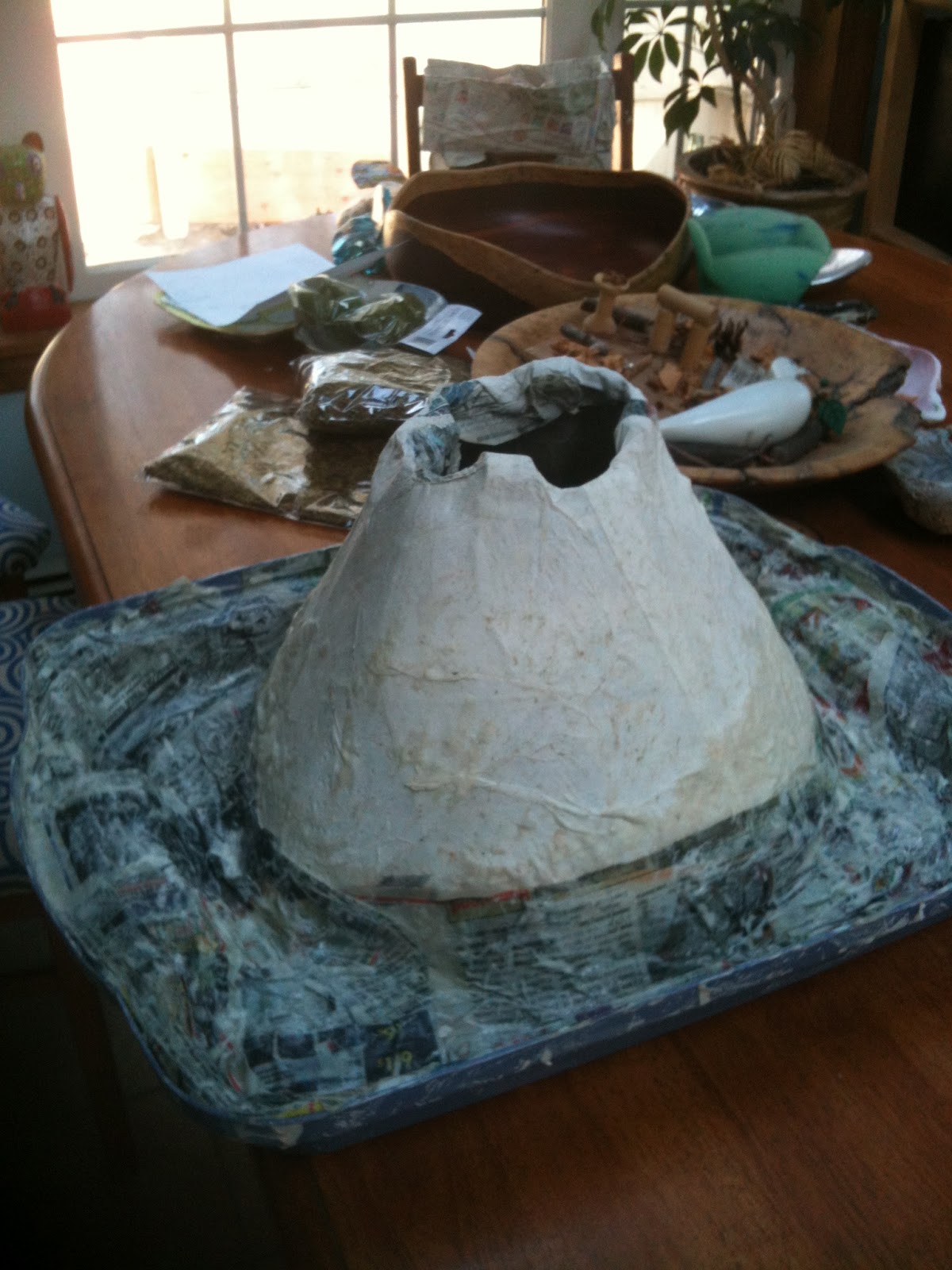
Plan & Start Volcano Project


History Diorama intro: The US Map from 1820-1850

Farm


Amanda’s New Life summary: Amanda has just gotten married to Matthew William Ritter. The Next year she gave birth to her first child, her son John Nathan. The next year she gave birth to twins, Jennie and Jeremiah. Amanda raised her children to be little cowboys and cowgirls in Texas. Amanda was about 35 years old now 

Amanda’s Home on the Range summary: Amanda has gotten to be the age of 47. Her daughter Jennie has just gotten married; she used Amanda silk wedding dress. John Nathan and Jeremiah also got married. They decided to make a triple wedding and Amanda cried through the whole thing. Her first granddaughter, Mary Megan was born and she grew up to get married when Amanda was 65. Amanda had a wonderful life In Texas.

Day 131 Geology


 March 7, 2012   Day 131

Writing: Telling Room Submission

LA book: 1 page

Math: 2 pages

Latin: Chapter 9 prepositions

Geology 6 x 6 using Earth’s Shifting Surface

6 Vocabulary

1. Infrared: A wave of energy that is emitted by heated objects

2. Richter Scale: A scale used measuring the intensity of an earthquake

3. Moment Magnitude Scale: Scale that measures earthquakes based on the size of area affected

4. Mercalli scale: scale for measuring earthquakes based on the effects felt by humans and their surroundings

5. Shield (as in rock): Area of ancient rock at the heart of a continent

6. Igneous rock: Rock that was once molten and has become solid again

6 Sentences

1. By detecting the infrared satellite, which is invisible to the human eye, we can locate undersea volcanoes.

2. There are different ways of recording the strength of earthquakes, a common tool, is a Richter scale which is based on the seismometer readings.

3. Scientists don’t use Richter Scales anymore because they don’t consider it to be very accurate, especially in really big earthquakes they prefer to use the Moment Magnitude Scale which measures the energy released by an earthquake and the size of the area affected by it.

4. The Mercalli Scale describes earthquakes according to their effects and damage.

5. The oldest shields of the continental crust are over 3 billion years old.

6. Rocks that form from cooling lava are igneous rock, it is the last form of the rock cycle and an igneous rock is what we know as a rock.

6 Facts & Details

1. An Infrared can indicate if magma is rising from an undersea volcano and give warning if an eruption is about to take place

2. In the deserts of northern Ethiopia, a new sea is forming

3. There is no water yet but the Arabian and African tectonic plates are slowly pulling apart

4. Millions of years from now, water will rush in to the gap

5. This is the same process that formed the Atlantic Ocean

6. Scientists have been able to study it in detail thanks to satellite observations, it is the biggest tear seen since satellite monitoring began

6 Questions

1. How do satellites and GPS help scientist learn about plate tectonics? A: Satellites can take pictures from a far distance of things that are on the other side of the world and bring them back to the scientists through computers, it can also see underground, GPS surveys the land based on the signals it received=s from the satellites in space.

2. What are the various speeds of the Earth’s plates? A: The northern end of the Mid-Atlantic ridge has the slowest moving plates moving less than 1 inch in a year, The East Pacific Rise, in the South Pacific zips along at a speedy 6 inches in one year

3. What is happening to the Earth’s crust in the desert of North Ethiopia? A: It is tearing, creating a new sea

4. Which of the three earthquake measuring tools—Richter, MMS, or Mercalli—do you like best? A: Mercalli; I think that the Mercalli scale is great because it doesn’t need to use other tools of instruments like the MMS or Richter. It is simply based on what people see and experience during an earthquake

5. Which 3 modern volcanic eruptions have affected people in your family? A: Mount Pinatubo, Mount St. Helens and Mount Waimaea

6. How did you do on the Quiz (page 44)? A:6 out of 7 questions right

Answer I got wrong: How many of the fastest living cities were built in earthquake zones

My answer: 15

Right Answer: 40

6 Points of Interest from Graphic Organizer book: Physical Weathering and Erosion—Compare and Contrast pg.12 and Concept Web

1. Water: In Chemical Weathering: combines with minerals to form new compounds, and creates acid that breaks down rock, In Physical weathering: Freezes

2. Air: in Chemical Weathering: Pollution in air can combine with rain to make acids that break down rock in Physical weathering: Wind rubs the particles it carries against rock wearing away the rock

3. Living things: Chemical Weathering: Gives out acids that break down rock Physical weathering: Plant roots crack rock, Animals dig through the ground and break apart rock

4. Water carries sediment downhill carving valleys between mountains and hills

5. Ice carries rocks and sediment downhill in large frozen masses called glaciers

6. Wind lifts smaller sediment particles and carries them to new places through deflation
6 Images


Wednesday, March 7, 2012

Days 129 & 130: Mexican American War & Gold Rush

March 5 & 6, 2012     Day 129 + 130

LA Book: 2 pages

Math Books: 4 pages

Reading: Finish Soft Rain  *Book Report to come later this week.

Mexican American War 3 x 6 & Web Quest

3 Vocabulary

1.  Annexation: To join or add, especially something large, to add territory by conquest or occupation

2. Cessation: A ceasing or stopping; discontinuance

3. Rio Grande: A river in North America south west to the Gulf of Mexico


3 Sentences

1.       The Mexican American War was during the wake of the 1845 annexation of Texas, which was considered part of its territory despite the Texas Revolution 1846.

2. After the Americans occupied parts of New Mexico and California they tried to invade parts of Northwest Mexico and Northeastern Mexico, this turned into a battle which the Americans won but the Mexicans would still not agree to the cessation of its northern territories.

3. The Mexicans accepted the border line of each country to be the Rio Grande River, just west of the flowing into the Gulf of Mexico.

3 Facts & Details

1. Zachary Taylor led the American army during the Mexican American War, his nickname was “rough and ready”

2. The Mexicans surrendered the war on March 27, 1848

3. At first James Polk offered 30,000,000 dollars to Mexico for its northern territories, Mexico declined


3 Questions

1. How much money did Pres. Polk offer Mexico for the Rio Grande border and all land north? A: 30,000

2. How much land was added to the United States as a result of the Mex. American War? A: More than 500,000 square miles

3. How is Henry David Thoreau connected to the Mexican American War? A: Henry David Thoreau was told to pay six years of taxes and then refused because of his opposition of the Mexican Americans war and slavery


3 Images (or more if you want)


3 People

1. President James Polk: President at the time of the Mexican American War, offered 30,000,000 dollars to Mexico for its land, supported the war

2.  John Slidell: Louisiana Lawyer, and naval officer, sent to Mexico by Polk to negotiate the Rio Grande border issue

3. George McClellan, Ulysses S. Grant, and Robert E. Lee:  Soldiers of the Mexican American War


BONUS: What did you learn about President Zachary Taylor? And how is he related to the Mexican American War?

Zachary Taylor was a Mexican American War hero; he helped win 500,000 square miles of land from Mexico. Taylor also stood up for his political beliefs against slavery. Taylor was against the Missouri Compromise and thought that California should be a free state, many people believed that as well, although many other people did not.


Gold Rush 3 x 6 & WebQuest  

3 Vocabulary

1. “Forty-niners”: A prospector who went to California in 1849 searching for gold

2. Panning: A form of placer mining that extracts gold from a placer deposit using a pan

3. Boomtown: A community that experiences a sudden or rapid increase in population, The California Gold Rush is a very famous example of a boomtown creation


3 Sentences

1. Not all of the forty-niners seeking gold in the Western United States were American. In fact about half of them came from countries all over the world including, Mexico, France, Turkey, China, Germany, and Australia.

2. At first, the gold could be picked up off of the ground, but later the gold had to be recovered from the streams using simple techniques such as panning.

3. San Francisco went from a town with nearly 200 residents to a boomtown with more than 36,000 by 1852.

3 Facts & Details

1. Very few people actually made any money off of the gold they found.

2. In Gold Rush California success followed a willingness to try and fail and try and fail and these people believed that getting gold wasn’t by the help of God, but by luck

3. Samuel Brannon made more money than the gold rush miners selling thousands of shovels and pans


3 Questions

1. What year did the California Gold Rush start? A: 1849

2. Approximately how many people came to California in search of gold? Were they all Americans? A: over 300,000 people and about half of them were foreign

3. What happened to most of the people who rushed to California to find gold? A: they didn’t find any and just stayed there


3 Images (or more if you want)


3 People

1. James W. Marshall: An American carpenter and sawmill operator who struck gold in 1848 setting the stage for the California Gold Rush

2. John Sutter: The man with a dream of starting a new city in California but his dream was ruined by the discovery of gold

3. Samuel Brannan: A San Francisco merchant who made more money than any of the prospectors of the California Gold Rush just by selling pans and shovels

Summary: Amanda Goes West

Link to book
Amanda, set off for Texas on her 14th birthday with her family. She didn’t like the journey but she enjoyed the destination. She met a young boy named Andrew and her neighbor Samantha and they all became good friends. There are two more Amanda books that I will read about her life as a young 19th century American woman soon. I really like this book because I get to learn Amanda’s story and dress her up in these beautiful dresses.

Final Submission to The Telling Room Writing Contest for Middle Schoolers


Telling Room Story: Review, Edit, & Submit

Final submitted to Telling Room on 3/7/2012

Searching for Maine; Searching for ME!

When I skate, I feel free, like a bird let out of its cage on a warm summer day all of the problems and challenges of my life are blown away with every jump, all the awkwardness in an eleven year old girls life is gone with every spin, and I can never stop smiling. I love to skate and show everyone who I am, me and no one can change that.

My name is Sophie Calderwood. I am an eleven year old girl who was born and raised in Maine. I was born in Portland and then moved to Brunswick when I was four. Moving to Brunswick, made me closer to my grandmother, my aunt and uncle, and a rink. I started figure skating when I was two years old but being in Portland was really hard to find a rink and be with my coach in Brunswick. So the day after we moved, I started Saturday morning skating lessons with Coach Linda Despres. I loved it; I learned my basic skills on Saturday and then worked on my programs with Linda on Wednesday mornings.

Even when I was four years old, I knew that skating was my passion. Everybody knew that I loved it because I had this huge smile on my face that showed that I loved to skate. The years went by and I still skated. When I was seven, my cousins, my grandmother, my friend Franzie, my family and I went to the State Games in Colorado Springs. The State Games is like a mini Olympics, all of the state competitors compete to qualify, we were very lucky that all of us made it. After I compete, I love to see the expressions on the Judges faces, a serious look but a hidden smirk of a smile in the distance; I know that I did my best even if I fell on everything, I will try again.

                It was super cool to represent the State of Maine in the State Games, in fact we all got lobster hats and T-Shirts to show everybody that we are proud to be from Maine! We competed against the other qualifiers from each state. I was in the beginner level at this time, but it was still very nerve wracking to go out there and compete against twenty-five other people in my group! I was very proud of myself when the competition was over because I got a medal in each my group! I won fourth in my program, third in compulsories, fourth in spins, and FIRST in my showcase.

A showcase number is like a theatrical program, it is where you get to skate and act out the music. The music that I competed with in Colorado was “Buffalo Gals.” I used that number in the show that year as well. The Skating Club of Brunswick does a skating show each year. I have been in each one since I was six months old! I love to do the shows because I love to perform. When I perform in shows, I absolutely love it because when I look up in to the audience, I see smiling faces enjoying my skating and are not afraid I am going to beat their daughter in competition.  I love to see people entertained.

When I was eight I landed my axel, a jump with one and a half rotations in the air. It doesn’t really sound hard but it is the milestone that separates an average skater from a pretty good skater. When I was nine, I worked on getting my axel consistent and over the past two years I have been trying to land my double jumps. When I land a jump, it is the most amazing feeling, I feel accomplished because all my hard work has paid off, usually I run to my coach and give her a great big hug as she congratulates me and then I go try it again!

There are six double jumps, double Salchow, double toe loop, double flip, double loop, double Lutz, and double Axel. Just recently I have landed and perfected all of these. I was so proud of myself, but I do not want to be just a skater who has a one in a million chance in getting to the Olympics. When I am old enough I want to be in Disney Ice, or any of the shows like that because, like I said I love to perform.

Friday, March 2, 2012

Day 128 Geology & "The Lorax"

Day 128  March 2, 2012

LA Book: 1 page

Math: 2 pages, weather book


Reading: SoftRain                       

Outing: Movie “The Lorax” with Gamma


Geology 6 x 6 Earths’ Shifting Surface, pages 28-39

6 Vocabulary

1. Earthquake: shaking of the ground caused by the sudden movement of the rocks in the crust

2. Faults: A fracture in Earth’s crust along which rocks have moved. Most faults occur in groups called fault zones near plate boundaries

3. Shockwave: Waves of energy sent out when, for example, rocks are shifted beneath Earth by an earthquake

4. Plate margin: The meeting place of one plate to another

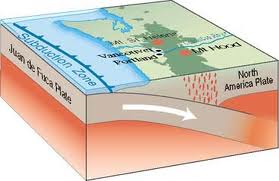
5. Volcanoes (list 4 kinds): Cinder cones are a volcano largely formed with rock fragments rather than lava, shield volcanoes are low, gently sloping volcanoes that are formed from lava that has solidified, lava dome volcanoes are formed by lava that doesn’t flow well and forms a cap over a volcanoes vent, stratovolcanoes are known as composite volcanoes because they are formed from layers of different materials

6. Mineral: substances found in nature, rocks are made from a lot of minerals

6 Sentences

1. An earthquake that happens under the sea triggers a tsunami because the tectonic plates keep moving after the earthquake.

2. The rate of movement along the San Andreas fault is around 2 inches a year; scientists predict that if this movement continues that San Francisco and Los Angeles will be next to each other around 15 million years from now.

3. A seismometer studies the shockwaves caused by an Earthquake.

4. There are four types of plate margin, destructive, collision, constructive, and conservative

5. The Ring of Fire is an area around the Pacific Ocean that is dotted with volcanoes; more than half of the world’s active volcanoes are found on the Ring of Fire, most of the earthquakes as well.

6. Suzy’s dad studies minerals, he is a mineralogist.  

6 Facts & Details

1. Preparation and responses to earthquakes is better than some countries than others. Countries that are developed and wealthy, such as the United States and Japan, cope quite well, poor countries such as Haiti, do not.

2. In some places, the magma heats water beneath the ground so it erupts in spectacular geysers

3. Scientists believe that the Volcanoes that are not close to the plate edges were formed by a hot spot under the plates

4. One of the reasons that communities have grown near volcanoes, is that volcanic soils are the most fertile in the world, this makes them idea for farming

5. Volcanic lava contains valuable minerals such as gold, zinc, and copper, they make an area near a volcano appealing to settlers

6. A caldera is a result of a massive eruption which then turns into an active volcano

6 Questions

1. Describe the Ring of Fire: the Ring of fire is a group of active volcanoes around the Pacific plate, this is where more than half of the world volcano eruptions happen, it also known for the being the most active place earthquakes

2. Can we predict earthquakes? A: Satellite imaging technology is so advanced now that it can detect movements in the crust of just a millimeter, this kind of satellite may one day be able to give advanced warnings of an earthquake  

3. Describe the 1906 San Francisco earthquake: this was a massive earthquake in San Francisco that killed about Seven Hundred people, and caused the whole city to be badly damaged, fires that took three days to bring under control caused even more damage, but the people repaired the city  

4. What is the epicenter of an earthquake? A: the epicenter is the center of the break of the tectonic plates

5. What happens when an earthquake occurs in the ocean? A: it triggers a tsunami

6. How long is the San Andres fault line and where is it located? A: The San Andreas fault is 680 miles long and it is located in California

6 Images


6 Points of Interest Graphic Organizer: Classifying Web: Chemical Weathering  pg. 11

1. In chemical weathering, water, air, and acids cause chemical changes in the minerals of the rocks

2. Water dissolves the rock

3. Oxygen forms new compounds with minerals in rock, weakening the rock through oxidation when air touches the weathered rock

4. Acid gases in the air combine with rain to form acids, which break down faster than water

5. Water forms new compounds with the minerals in the rock, softening the rock

6. Some living things give off acid that breaks down the rock

Thursday, March 1, 2012

Day 126 The Alamo & Leap Day

Day 126

February 29, 2012 Leap day!

LA Book: 1 page

Math: 2 pages *History book today—lesson about building sod houses, used on the plains when there were no logs to build with

Sophie’s Blog: What is a “Leap Year”?   Write a little rhyming poem about Leap Day!

A leap year’s quadrennial,

It adds in an extra day,

To catch up with the planets,

In Februaray!


A leap year has 29 days,

Instead of 28,

Which adds 366,

A lot of math to calculate!


Every year we have Daylight Savings,

This messes up the time,

So every four years,

We add an extra day,

And that doesn’t rhyme!

Alamo 6 x 6 using Susanna of the Alamo by John Jakes


6 Vocabulary

1. Province: An administrative division or unit in a country

2. Dictator: A person exercising absolute power, especially a ruler who has unrestricted control in a government without hereditary succession.

3.  Rebellion: open, organized, and armed resistance over one’s government or ruler

4. Deguello: A bugle call meaning “to cut the throat” when the Red Flag was raised by the Mexicans during the Alamo, they called out Duguello to start the battle. “Show no mercy, Kill everyone”

5. Washington-on-the-Brazos: An unincorporated area along the Brazos River in Washington County, Texas. It was founded when Texas was still part of Mexico

6. “Remember the Alamo”: A saying that the Texans use to remember the “Heroes” that fought in the Alamo

6 Sentences

1. The Americans that lived in Texas considered it the United States province because they lived there but really, it was still Mexican land.

2. Santa Anna was the el Presidente of Mexico, he was a dictator but the Texans did not truly believe that.

3. The Texans planned a rebellion on Santa Anna and the Mexican army because they did not like the way Santa Anna was treating them.

4. All of Santa Anna’s bands were playing “Deguello” together, so everyone could hear it above the gunfire.

5. On March 2, 1836 Texas Independence was declared at a special convention.

6. “Remember the Alamo” is now a song written by Jane Bowers and recorded by Johnny Cash explaining the battle.

6 Facts/ Details

1. William B. Travis and Jim Bowie were the leaders of the Texan side during the Alamo

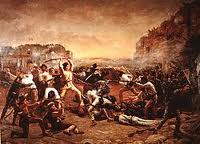
2. The Alamo was a pivotal event of the Texas Revolution with a 13 day siege  

3. Antonia de Lopez Santa Anna only wanted to kill the soldiers, so he commanded the Woman, children, elderly, and slaves to leave the Alamo so they wouldn’t be harmed but the Texans didn’t listen

4. All but two of the Americans died during the battle of the Alamo. That counted 188 dead Texans and 1,600 dead Mexicans; however the Americans still lost the battle

5. The Mexicans did not bury the dead soldiers; they burnt all but a few of Mexican Ancestry, such as Santa Anna’s brother Esparza

6. The Battle of the Alamo was really short; it only lasted a few hours but the Texas rebellion led by Sam Houston lasted only 18 minutes

6 Questions

1. What was the Alamo originally before the standoff and battle made it into a fort? A: A mission or Church

2. What did Davy Crockett call his long rifle? What else did he bring with him from Tennessee? A: Betsy- 12 men and a fiddle

3. How many days did the siege at the Alamo last? A: 13

4. How did Susanna Dickinson help the Republic of Texas? A: She went back to Gonzalez to Warn the Texans of battle

5. Was Santa Anna a dictator or was he protecting his country and his people? Or was it a little of both? A: He was a little of both, Santa Anna was a dictator because he was el Presidente and he was protecting his country and people because of that, and because he was a general

6.  How many people died in the battle for the Alamo? A: 1,788 people

6 People

1.  General, el Presidente, Santa Anna: The president of Mexico and General of their army. I believe Santa Anna was a good person because he gave 13 days of warning for the Texans to move because they were in his country. He also did not want to kill anyone but the soldiers which was good

2. Davy Crockett: Former Congressman, King of the Wild Frontier, One of the leaders of the Texan army during the Alamo

3. Jim Bowie: An adventurer who carried a hunting knife named after him. He was supposed to command the Alamo but he got sick with pneumonia so Crockett took his place

4. William B. Travis: A lawyer from Alabama and a strong leader he shared command with Jim Bowie and Davy Crockett during the battle of the Alamo

5. Susanna Dickinson: A Woman Defender of the Alamo who fought for Texas with her husband, who died in battle, and her young daughter Angelina

6. General Sam Houston: Born 1793, A man with a hot temper, he led the Texas rebellion against Santa Anna on March 6, 1836

6 Images


Days 124 & 125 The Oregon Trail


February 27 & 28th, 2012

Days 124 & 125: The Oregon Trail

Colonial Skating Blog: Yesterday I left early to go to Boxboro Massachusetts again for lessons with Debi and Matt. On the way there I did my workbooks and played Oregon Trail. When we got there, we got my skates sharpened and got on the ice for my lesson with Debi. First we spun, I learned all sorts of cool new spins to put in my Worcester program. Then we jumped, starting with an axel. My axels were really good yesterday! My axels are good all the time now which is really good! Then we did all my double jumps! I was very excited because I landed all of them. After, Linda wanted to show Debi my programs, both my Jeannie and my Worcester. I basically had the same lesson with Matt. It was a really good day and both coaches said that I have improved dramatically. It was great, and I skated today as well and everything was. I even got to show mom my double lutz!

Oregon Trail game report: Corrie, Kevin, Lily, Sophie, and Ben started along the Oregon Trail with their wagon and oxen in 1836. Kevin was a banker, which means he could negotiate good deals with the Native Americans. Overall, our trip to Oregon was good. We had a few starvations, a couple of times where the wagon broke down, a few Eagle and Bear attacks, and many diagnoses of diseases. About when we got to Colorado, Ben died of Typhoid, so we only reached Oregon with 4 of the family members left, Corrie had a broken arm when we got to Oregon.

LA book: 2 pages

Math: 4 pages

Oregon Trail Web Quest:


A.      Write a good 6 + sentence paragraph summarizing what you learned:

The Oregon-California trail was 2,140 miles long from St. Louis Missouri to either Oregon or California, which ever route that you chose. The first trip along the Oregon Trail was made by Marcus and Narcissa Whitman. They started off the migration for MANY other American families who wanted to start a new life. Over 5,000 people made the trip to Oregon in a covered wagon pulled by Oxen. It took 4-6 months to get there but most of the families made with at least one person living.   


2.       Follow this link: http://www.historyglobe.com/ot/otmap1.htm  

A. Follow the trail and click the links to learn about important points and see images. Write one sentence per site here and copy, paste, and Save As images:

1. In Independence, Missouri the pioneers considered it the “Jumping point” because it was the start of the Oregon Trail.


2. Courthouse Rock and Jailhouse rock were one of the first landmarks that the pioneers would see on the trail.

3. Chimney Rock signaled the end of the Prairies and rugged steep trails ahead.

4. Fort Laramie was started by the fur traders, but then became an active trading station for the pioneers.

5. Named such because it was found on the 50th anniversary of the Declaration of Independence.

6. A Mormon settled fort and trading post.

7. Bubbling pools of carbonated water caused by ancient volcanic action

8. A ort along the Snake River, first used as a fur trading post.

9. A fort used as a supply point for the pioneers.

10. The Whitman mission is a fort on the Northern fork of the Oregon Trail.

11. The Dalles is a huge sandbar across the Columbia River that the pioneers used

12. Oregon City as the ending of the Oregon Trail


3.       Follow this link and watch video (may be slow to upload): http://www.youtube.com/watch?v=0zu6SqfblzQ&feature=related

A.      How does the video game, “The Oregon Trail,” teach you about the hardships, challenges, and rewards about this historical event? Write 3 good paragraphs below.


The Oregon Trail Video Game is very accurate and historically right with there events. There were a lot of choices that needed to be made on the Oregon Trail and there are a lot of choices to be made in the Video Game. The game makers were also accurate on all of the problems and dangers of the Oregon Trail. Because of the harsh circumstances, the emigrants got diagnosed with diseases very quickly, there were also a lot of weather hazards that got in the way of progress on the Oregon trail.

The Video game makers were historically correct on about the timing and progress of each day. Depending on the weather, the pioneers would get about 12 miles each day, that isn’t really a lot, but the fastest speed that they could go was 2 miles per hour!

They also made the dates on reaching the forts accurate also. The trip took about 3 months and that was true in the game. All the forts were right and they did great making it. I had a lot of fun playing the game and I think it teaches a lot about The Oregon trail because of all the accuracy and historical events.