Pages

Wednesday, November 2, 2011

What about Lily? Lily is doing great!

Lily is five years old and attends a Preschool program two mornings a week. Her teacher is Mrs. Toothaker and she has a lot of new friends at school and they do all kinds of things: painting, crafts, creative play, songs, snack, reading time, show-and-tell, playground visits, and even field trips when she got to ride on a school bus!


Lily looks forward to going to school every day and has shown a lot of growth and maturity to be in a classroom with teachers and other kids. It's a nice space full of colors and games and dress-up and she has her own cubby with her name and one of her most favorite things to do is to play with the colored sand table!


She has been busy with homeschool too! In the first picture, she's at the Brunswick Family Art is Fun festival earlier this fall. She had a great time going from station to station and creating all kinds of wonderful art. She had a great time with Sophie and I on our ecology walk and she really liked learning about lichen and did an awesome job identifying all the different kinds of pretty-colored lichen on the trails we walked. She didn't like the mushroom finding at first but once she saw how cool is was to gently touch all the different kinds of mushrooms and talk about their shapes and colors, she had a great time too! That was the day we met the lady scientist from the Ecology Center and helped release a female turtle that they were studying.
She also went with Sophie and I to Rocky Ridge Apple Orchard to pick yummy apples that we used to make applesauce and pies. And Lily loves to eat apples. She had so much fun and was a big help with the wagon and picking good apples. We had lunch and then played in the pumpkin patch and swung on the rope swing in the barn.

For "school" work, Lily has been reading, writing, and learning math. Lily and I spend time together reading and talking about letters and words. Her writing has improved tremendously and she especially likes to copy words I write for her on her own piece of paper. She loves to color and paint and draw and spends a lot of time while Sophie is working on school quietly coloring in the sunroom.

She also loves to play with her magnet and kinex sets that Uncle Aaron and Gamma and Bo gave her. She really loves to build and re-build. Sophie likes to play with these toys too!
Lily is learning math on her abacus. She knows that the plain beads are "Ones" and that each line has 10 plain beads and there are two lines of plain beads. She knows how to "read" a simple numbered math problem that I write for her on a paper, like 2 + 5 =, and she knows to move two plain beads over on one line and then five plain beads on the second line and then to count them to "add" and solve the problem. She's then able to write the number for the math sentence to "answer" the problem.
I am super impressed with her math skills and after two days of working with the abacus, not only was she correctly solving simple addition problems but also understood how to use the abacus for subtraction!


Lily also spends two half-days at the farm and does "Farm School" with Gamma and Bo! She works on art with Gamma and on spelling and letters with Bo. Here is his assessment of her learning:
GOAL: Letter recognition

Objective:  visuallydifferentiate between letters of similar shape or special orientation.

Materials:  worksheets with rows of 2 different letters from this array: pqbp

Lily was able to find the ps in the qs, bs in the ps, etc.

In these exercises, the brain notices that letters may bethe same shape, but appear in different special orientations.

Lily noticed that:
 the “tail” on the band d were pointing up.
 the “tail” on the pand q were  pointing down.

NOTE:  letter features[tails , hooks, et al] that appear above and below the line are cues for thebrain to differentiate the different shapes/orientation of the letters.

Lily demonstrates advanced letter recognition skills for her age.


She likes to play all kinds of fun games with Gamma and Bo and learns a lot on the computer too! She's doing her own Farm School project for Christmas and I am just so impressed with all the cool things she making for her friends and family!
Here's a sneak peek:

Just wait until you see....later.
I couldn't be prouder or happier to have my beautiful Lily home with us and also so happy for her to have such a nice preschool experience. She's learning so much and growing each and every day. Like her Dad, she makes me laugh every day, especially when I really need it. Like her sister, I am continuously amazed with her intelligence and creativity. But she brings her own special skills to her learning too--she's a wicked problem and puzzle solver, is really interested in how things work or how to make and build things, she is a natural scientist with a curiosity to experiment, and she's a talented artist with a precision for detail when she wants to.


Days 53, 54

November 1 & 2, 2011 Days 53 & 54

Ecosystem Mad Lib

*Using Ecosystem Vocabulary words below, write fun Pond Observation Mad Lib for your Almanac!

Write at least 15 good sentences using the vocabulary and telling the stories of Summer & fall Pond Observations for all three ponds. Mad Lib “blanks” should include: pronouns, adjectives, adverbs, nouns, & verbs!

1. Energy: usually derived from sunlight, but rarely and in small quantities derived from other sources, this energy then moves through the ecosystem

2. Abiotic factors: including water, soil minerals, and atmospheric gases the abiotic environment is made up of many objects and forces that influence one another

3. biotic factors: including producer organisms, consumer organisms, and reducer organisms; an organism’s survival  and well being depend largely on getting the food it requires on associates with other living things

4. Producer organisms: usually green plants are capable of capturing sunlight energy through the process of photosynthesis

5. consumer organisms: include some plants and all animals in the community

6. reducer organisms: are mainly bacteria and fungi that decay and decompose the bodies of dead plants and animals

7. Nitrogen: a colorless, odorless, gaseous element that constitutes about four-fifths of the volume of the atmosphere and is present in combined form in animal and vegetable tissues,

8. Biome: a complex biotic community characterized by distinctive plant and animal species and maintained under the climatic conditions of the region,

9. Rain forest: A tropical forest, usually tall, and densely growing,

10.  Desert: a region so arid because of little rainfall that it supports only sparse and widely spaced vegetation or no vegetation at all

11. Coniferous forest: a type of forest characterized by cone-bearing, needle-leaved trees

12. Tundra: one of the vast, nearly level, treeless plains of the arctic regions of Europe, Asia, and North America.

*Using Ecosystem Vocabulary words below, write fun Pond Observation Mad Lib for your Almanac!

Write at least 15 good sentences using the vocabulary and telling the stories of Summer & fall Pond Observations for all three ponds. Mad Lib “blanks” should include: pronouns, adjectives, adverbs, nouns, & verbs!

*First draft with a few mistakes to fix/ edit

The pond at the farm is a perfect example for* an ecosystem. The abiotic factors (*def) of the pond at the farm make it very functional as an ecosystem. An ecosystem is a *system of a biome* where the food cycle goes on. There are ecosystems all over the world. There are some located in the tundra, the amazing rain forests, the deserts, and the coniferous forests (forest filled with pine trees*). Climates and environments outside *effect the ecosystem as well, such as solar energy. Producer organisms, consumer organisms, and reducer organisms are mainly involved with the ecosystem as well. They are the plants and animals associated with the ecosystem. These organisms combined together are called biotic factors. There is one more important detail that you need to know to complete an ecosystem, which is nitrogen. Nitrogen is a gaseous element of an ecosystem that both abiotic and biotic factors need to survive. *One or two more “fun” sentences about the farm pond as an ecosystem. 

**Second draft with mistakes fixed & extra added sentences**

The pond at the farm is a perfect example of an ecosystem. The abiotic factors (including water, soil minerals, and atmospheric gases such as Nitrogen) of the pond at the farm make it very functional as an ecosystem. An ecosystem is a biome system where the food cycle goes on. There are ecosystems all over the world. There are some located in the tundra, the amazing rain forests, the deserts, and the coniferous forests (forest filled with pine trees, like the state of Maine). Climates and environments outside affect the ecosystem as well, such as solar energy. Producer organisms, consumer organisms, and reducer organisms are mainly involved with the ecosystem as well. They are the plants and animals associated with the ecosystem. These organisms combined together are called biotic factors. There is one more important detail that you need to know to complete an ecosystem, which is nitrogen. Nitrogen is a gaseous element of an ecosystem that both abiotic and biotic factors need to survive. The pond ecosystem at the farm has all of these elements which makes a wonderful food chain and ecosystem. If something disturbs the ecosystem such as rain, snow, a leaf, or even a plastic bag, the plants and animals learn to create a new ecosystem with the new environment. If an animal or plant is taken away from the eco system the animals remaining in the ecosystem have to adapt and learn to survive in the new ecosystem. In the winter, when the fish are taken out of the pond, it disrupts the ecosystem and the plants and animals remaining such as the lily pads, the frogs, the rocks, and even the algae have to work together to create a whole new ecosystem. This ecosystem process is same with the ocean, the desert, and even a flower. If the community in the ecosystem works together after a disruption, everything in the ecosystem is all right.

**Final Mad Lib! (for almanac)

The pond at the farm is a _____________example of an ecosystem. The abiotic __________(including

                                                (adjective)                                                                                          (noun pl.)

water, soil minerals, and _____________gases such as nitrogen) of the pond at the farm ________it

                                                      (adjective)                                                                                                    (verb)
very functional as an ecosystem. An ecosystem is a biome ________where the food cycle________ on.

                                                                                                                (noun)                                                  (verbs)

There are ecosystems all over______________. There are some ___________in the tundra, the amazing

                                                                (adjective + noun)                           (verb)

rain forests, the deserts, and the coniferous forests (forests____________ filled with pine trees, like the

                                                                                                                                (adverb)

 state of Maine). Climates and environments outside __________________the ecosystem as well, such

                                                                                                                (adverb + verb)

as solar energy. Producer organisms, _______________organisms, and reducer organisms are ________

                                                                                (adjective)                                                                                   (adverb)

 involved with the ecosystem as well. __________are the plants and animals _______________with the

                                                                                (Pronoun)                                                           (verb)  

_______________. These organisms _____________together are called biotic factors. There is one more

(noun)                                                                  (verb)                  

important _____________that you need to know to ________________an ecosystem, which is nitrogen.

                     (noun)                                                                             (verb)  


Nitrogen is a gaseous element of an _____________that both abiotic and biotic factors ____________to

                                                                                (noun)                                                                                  (verb)

survive. The pond ecosystem at the farm has all of these ________ which makes a ______________food

                                                                                                                (noun)                                                  (adjective)

a chain an ecosystem. If something_______________ disturbs the ecosystem such as rain, snow, a leaf,

                                                                                (adverb)

or even a plastic____________, the plants and animals learn to ________a new ecosystem with the new

                             (noun)                                                                                     (verb)

environment. If an animal or plant is taken away from the ______________the animals remaining in the

                                                                                                                                (noun)

ecosystem have to adapt and ____________to survive in the new ecosystem. In the winter, when the

                                                           (verb)

_____________________are taken out of the pond, it ________________the ecosystem and the plants

(noun)                                                                                                  (verb)

and animals ______________such as the lily pads, the frogs, the___________, and even the algae have

                         (verb-ing)                                                                                   (noun)

to _________________together to create a whole new ecosystem. This ________________process is

            (verb)                                                                                                                         (adjective + noun)

same with the ocean, the desert, and even a flower. If the ________________in the

                                                                                                                (noun) 

 ecosystem______________ works together after a disruption, everything in the ecosystem is all right.


Reading: *Sophie will be attending this play that her good friend Emma is acting in this coming weekend! And she read this novel last year. A classic!


My Accidental Masterpiece: The Phantom Tollbooth

by Norton Juster


Paperback, 256 pages | purchase

Norton Juster is the author of The Phantom Tollbooth.

"There was once a boy named Milo who didn't know what to do with himself — not just sometimes but always. When he was in school he longed to be out, and when he was out he longed to be in ... Nothing really interested him — least of all the things that should have."

It was, of course, the doldrums — his own special version of them.

This year marks the 50th anniversary of that bored child's transformative journey. The Phantom Tollbooth was the first book I had ever written and my first collaboration with the cartoonist Jules Feiffer, who provided the marvelous illustrations.

Like most good things that have happened in my life, The Phantom Tollbooth came about because I was trying to avoid doing something else. It was 1958, and after three years in the Navy I returned to New York City to work as an architect. I had also received a grant to do a book on cities for children. I started with great energy and enthusiasm until I found myself waist-deep in stacks of 3-by-5 note cards, exhausted and dispirited. This is not what I wanted to do.

In order to stop thinking about cities, I had to start thinking about something else.

I had been an odd child: quiet, introverted and moody. Little was expected from me. Everyone left me alone to wander around inside my own head. When I grew up I still felt like that puzzled kid — disconnected, disinterested and confused. There was no rhyme or reason in his life. My thoughts focused on him, and I began writing about his childhood, which was really mine.

Coming home from school one day, Milo finds an unexpected gift: a highway tollbooth, a map and directions to a place called the Lands Beyond.

So off he goes on his journey of discovery. He travels to Dictionopolis, the kingdom of words, to Digitopolis, the land of numbers, escapes from the doldrums, goes astray by jumping to the Island of Conclusions and at last rescues the two princesses, Rhyme and Reason, from the Castle in the Air. 

Not everyone in the publishing world of the 1960s embraced The Phantom Tollbooth. Many said that it was not a children's book, the vocabulary was much too difficult, and the ideas were beyond kids. To top it off, they claimed fantasy was bad for children because it disorients them.

The prevailing wisdom of the time held that learning should be more accessible and less discouraging. The aim was that no child would ever have to confront anything that he or she didn't already know.

But my feeling is that there is no such thing as a difficult word. There are only words you don't know yet — the kind of liberating words that Milo encounters on his adventure.

Today's world of texting and tweeting is quite a different place, but children are still the same as they've always been. They still get bored and confused, and still struggle to figure out the important questions of life.

Well, one thing has changed: As many states eliminate tolls on highways, some children may never encounter a real tollbooth.

Luckily there are other routes to the Lands Beyond. And it is possible to seek them, and fun to try.

Math: 2 pages Guinness book—almost done with workbook

LA Book: 2 pages, her choice. *this is a great, challenging book and Sophie seems to really like it & it’s great because she chooses the reading she wants to do and completes them on her own or we ca work together or with Bo during Farm School. I really approve of this series:

On Wednesday Sophie did another page in this book about the Blarney Stone in Ireland. She really likes this book~

Farm School: Almanac work, crossword puzzle vocabulary (20 words), picture editing

Crossword Vocabulary & Clues: *for Almanac

Expedition  - Lewisand Clarke’s journey.


Tundra        - Arcticeco-system surface.


Continental Divide – continent, add, subtract, multiply...?


Ecology – science of a globe system.


Secretary – occupation: record dates and events.


Keelboat -  big canoe.


Obtuse – crooked 91 degrees.


Biomes – Nature groups.


Nitrogen – element, fertilizer, gas


Surveyors – They map out land.


Savanna –   Vast surface of grass.


Sagacity – old wise owl trait.


Interpreter – word charade.


Naturalist – one who studies nature.


Auge – extreme hot and cold symptoms, Goddess of childbirth.


Triangle – 135 degrees, equally divided.


Organisms – Living examples: animal, plant, fungus. 


Inherited –family treasures passED down.


Energy –  sleep + food=


Acute – 89 not an ugly angle
Day 52


October 28, 2011 Day 52

LA Book: 1 page, Sophie’s choice, she did a reading about Lewis & Clark and answered the reading comprehension questions

Math—Column Division—5 problems

Planes, Vertex, angle measurement, angle identification

Lewis & Clark Board game—Story Map + Blog

Today I did my rough draft story map for my Lewis and Clark expedition board game. First I placed and named Fort Mandan and Fort Clatsop as close to where they were really located as possible. Then I drew little squares on the route of the westward expedition. I then drew another route to recognize the homeward expedition as well. I then wrote on what I want and where to put the pictures I want to decorate the board with.

School Pictures—Blog

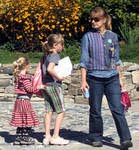
Yesterday we went to Portland to have our School Pictures taken at the mall. When we got there we met our photographer Tom and he was absolutely hilarious! We got our Halloween pictures taken on a black backdrop and it was so much fun. Then we changed into our school outfits and we got our school pictures taken. I chose to where a gray tunic with purple flower designs on it and lily chose to where a pink Rapunzel tangled shirt and a purple skirt. We got our school pictures done and they turned out really nice. We put our skates on and our skating dresses for our next pictures they also turned out extraordinary and the trip to Portland was definitely worth it.

New Dance teacher & lesson—Blog *Sophie will be tapping with Daphne once a week on Fridays.

Today I went and met my new dance teacher. Her name is Daphne McCoy and she was very nice and a very good tapper. I showed her Hit the Road Jack and Mr. Trell’s warm up. I think she liked me and I liked her. She taught me the beginning to the new dance that my class would be performing at her Christmas Recital. I will be visiting her again next week.  

Technical Difficulties Re-do: Lewis & Clark Glossary 6 x 6 *poor Sophie had to re-do her entire 6 x 6 for day 49 because Word made all her work disappear….but she actually did a better job on the re-do and had a good attitude about it!

Skating, skating, and more skating—Blog

Ever since Bowdoin started I have been skating my butt off! But it has definitely been worth it! My double flip has been coming along great and all my other doubles I have been working on like crazy. My new program is finished and Linda says it looks absolutely fabulous! I am going to be testing two dances as well and Rob says they are looking wonderful. My Intermediate moves are ready to test again. I’ve been doing those twizzles non-stop and haven’t fallen on them since the last test session. I’m going to keep working hard on all my skating.
Farm School: Almanac & Halloween Costume + Lily school

Friday, October 28, 2011

Days 50 & 51


October 26 & 27, 2011

Days 50 & 51

Ecology & Ecosystems

 6 x 6 for Sixth Grade

Vocabulary

1. Nitrogen: a colorless, odorless, gaseous element that constitutes about four-fifths of the volume of the atmosphere and is present in combined form in animal and vegetable tissues,

2. Biome: a complex biotic community characterized by distinctive plant and animal species and maintained under the climatic conditions of the region,

3. Rain forest: A tropical forest, usually tall, and densely growing,

4.  Desert: a region so arid because of little rainfall that it supports only sparse and widely spaced vegetation or no vegetation at all

5. Coniferous forest: a type of forest characterized by cone-bearing, needle-leaved trees

6. Tundra: one of the vast, nearly level, treeless plains of the arctic regions of Europe, Asia, and North America.

Sentences

1. Nitrogen makes up 78 percent of Earth’s atmosphere, but most organisms cannot use nitrogen in its gaseous form.

2. Ecologists divide the world into a few major ecosystems that share common characteristics but are scattered worldwide, these ecosystems are called biomes.

3. A tropical rain forest is predominantly found at or near the equator.

4. Deserts are defined as regions where evaporation exceeds rainfall, which makes a very interesting ecosystem to study.

5. A Coniferous forest has an average annual rainfall of 38 to 100 centimeters (15-40) inches per year.

6.  A Tundra is a type of Arctic grassland that is also found at elevations above timberline.

Details/ Facts

1. Many living things inhabit the Arctic Tundra

2. There is a Coniferous forest that covers the foothills of the Alps in Southern Germany

3. Some major biomes are tropical rain forests, savanna’s, deserts, grasslands, temperate deciduous forests, coniferous forests, and the tundra

4. After nitrogen has been fixed by bacteria, it circulates repeatedly between organism and the soil.

5. Scrub forests: A variant on the temperate deciduous forest biome is the so-called scub forest, found in the direr Mediterranean parts of the biome.

6. The herbaceous plants that grow in the arctic tundra tend to be small and stunted

Questions

1.  What is a water cycle? A: A water cycle is the cycle of the water that has transferred through the atmosphere, and has reached vegetation and soil as rainwater, but not all of it becomes available to living things, the cycle comes from the rain onto the roots that absorb the water, it sinks into the ground and into the ground water that then evaporates and the cycle starts all over again because after the water evaporates, it rains again

2. List 5 different common and important mineral nutrients commonly found in fertile soil: nitrogen, phosphorus, calcium, chlorine, manganese, molybdenum, and zinc

3. What percentage of the Earth’s atmosphere does Nitrogen make up? A: 78 percent

4. What are the 8 biomes scattered worldwide? A: rain forests, savannas, deserts, grasslands, deciduous forest, coniferous forests, the tundra, and aquatic biomes

5. In what parts of the world do you commonly find rain forests? A: The amazon river, the Congo basin, and Southeast Asia

6. What is a savanna? A: A Savanna is a transitional area usually found between tropical rain forests and deserts

Math *define these math terms

1. Vertex:  The endpoint of an angle is called a vertex

2. Skew lines: lines that do not lie in the same plane

3. Plane: A two dimensional surface that goes on and on in each direction without ending

4. Perpendicular lines: When two lines intersect, and the 4 angles on all sides of the intersection are exactly the same, the lines are called perpendicular lines

5. Straight angle: An angle that is exactly 180 degrees

6. Parallel lines: parallel lines lie in the same plane and are exactly the same distance apart


 Current Events *use Hyperlinks*

1. Find one current article discussing water issues in the world: Water issues link

2. Find one current article about the medicinal usefulness of plants in the rain forest: Rain forest SNUFFLELUPAGUS link

3. Find one current article about the extinction of a kind of animal: Animal Extinction

4. Find one current article about Nitrogen:  Nitrogen link by Sophie

5. Find one current article about fertile soil: Soil link

6. Find one current article about preservation of a tundra ecosystem: tundra link

Day 49


October 25, 2011 Day 49


Modified 6 x 6 using Lewis & Clark Expedition: An illustrated Glossary by Barbara Fifer

Vocabulary

1.       Auge: Any illness that includes chills or fevers such as the flu or Malaria

2. cache: A storage pit dug in the ground or the act of making and using one

3. cordelle: When the Missouri river was shallow and there was a flat bank to walk on, the men had to attach ropes to the boats and tow them upstream

4. frostbite: Exposure to severe low temperatures can cause water inside your skin to freeze cutting off the areas blood supply

5. mouth (of a river): where a creek or river end by flowing into another one or into an ocean

6. circumfrerntor: surveyors compass with sights opposite of each other and a compass between

Sentences *instead of using the vocabulary words for these sentences, write 6 GREAT, detailed, super-awesome sentences that you can use in your board game Rule Book. Make them fun to read!

1. Once upon a time a man that loved nature and the wilderness and a man that was super smart took and stupendous, exciting, and dangerous journey into the unknown.

2. Yes, the Lewis and Clark expedition tells the story of Meriwether Lewis and William Clark traveling into the Louisiana Territory where hundreds of unknown animals, plants, and Native Americans still roamed.

3. This extravaganza of an expedition was leaded by Captain Lewis and Co- Captain Clark, they lead 30 other men, a French trader Touissant Charbonneau and his Shoshone wife Sacagawea through rivers Mountains and plains of the west.

4. A long the way of the expedition, the Corps of Discovery met over 50 Native American tribes, most they made good peace with and others, not so much such as the incidents with the Sioux and Blackfoot tribes.

5. One time in 1805, some of the members of the expedition were out hunting for elk, and Lewis was collecting specimens for Thomas Jefferson, One of the members of the Corps accidently shot Lewis in the butt and he couldn’t walk for days.

6. The Lewis and Clark expedition was a super success and if it wasn’t for them, we might of never had the courage to explore the great west and we would be crammed from Maine to Georgia.

Forts *Look through glossary and name 6 Forts with location & importance to expedition

1. Fort Bellefontaine: Built on the Missouri river west of St Louis, it was the first U.S army post west of the Mississippi

2. Fort Clatsop: The shelter the men built for themselves and the Charbonneau family the winter of 1805-1806 near Astoria Oregon

3. Fort Kaskaskia: In Ellis Grove Illinois, across from the Mississippi river, the men built fort Kaskaskia and stayed there from November 27 to December 5

4. Fort Mandan: The Corps of Discovery arrived at the Mandan and Hidatsa in future Northwest North Dakota and stayed there the first winter

5. Fort Massac: In what is now Metropolis Illinois, on the Ohio river the men rebuilt a French fort and stayed there for 3 days

6. Fort Rock Campsite: Locally known as Rock Fort, the corps camped here for 4 days

Place Names

1. Beaverhead Rock: A Limestone monolith that rises 370’ above its base elevation of 4,949’. On August 8, 105 Sacagawea recognized the landmark and sad t was the area that her people spent their summers

2. Camp Disappointment: On the return trip, near the Mississippi river, all of the men were getting cold and hungry, and the weather wasn’t on their side at all, they stopped and camped at Camp Disappointment

3. New Orleans: The Capital of Louisiana, a super important port for commoners, and the original intent of the Louisiana Purchase

4. St. Louis: At the Mouth of the Missouri river, in 1803, St. Louis was a village of about 1,000 to 1,400 residents including slaves and freemen

5. Celilio Falls: The Great falls of the Columbia River are now called Celilo falls

6. Platte River: Forms at North Platte, Nebraska; the main platte flows into the Missouri  and the rest to the Mississippi

Questions

1.       What are the main differences between the black and grizzly bear and find an image of each to copy and paste here: the color, the size, and the teeth


2.       Identify 3 types of guns used on the expedition with at least one distinguishing detail: Flintlock rifle: The most common gun at the time and the most common gun used for the Corps   Muzzleloader: A gun that is loaded from the barrels opening (muzzle)      Fusil: A shorter, lightweight barrel gun


3.        What is a bison and how is it different from a buffalo? A: A bison is a big animal covered with fur, this animal is often called a buffalo, a buffalo has bigger horns than a bison and they’re not so curvy


4.        What are the three forks of the Missouri River and why is that important to the expedition? A:

The three forks of the Missouri are the parts of the river where it splits up in two different directions. The forks are important to the expedition because if Lewis and Clark chose the wrong way, the expedition would’ve failed


5.       What does it mean to be assigned to the “mess” in military terms? A:  It means you are assigned to cook and eat in your mess or group


6.       List 5 of the “Camps” set and used during the expedition:


1. Camp Chopunnish

2. Camp disappointment

3. Camp Dubois

4. Camp Fortunate

5. Camp wood


Landscape Features

1. Continental Divide: The natural dividing line in North America where water flows toward the Atlantic Ocean or toward the Pacific

2. The Dalles: Two-part construction of the Columbia river at the upstream end

3. Bitterroot Mountains: The Northern portion of the bitterroot range of the Rocky Mountains

4. Lolo Trail: North of and roughly parallel to present U.S highway 12 from Lolo Montana, this is the trail that the Nez Perce Indians told Lewis and Clark was the quickest way through the Bitterroots

5. Pillar Rock: The corps of Discovery camped on the Washington side of the Columbia river on November 7, 1805, opposite of Pillar Rock

6. Lemhi Pass: In the Beaverhead Mountains, at elevation of 7,339, east of today’s Tendoy, Idaho; On the westward trip, 5 members of the Corps crossed it 5 times